

Battery Pack Life Benchmarking Service
We compare battery packs using test conditions built from how your robots and mobility equipment operate.
Tell us about payload, slopes, speed and charging patterns. We build a test scenario from them and report how each pack degrades under the same conditions.
Pricing is quoted after consultation
When datasheet life and field life don't match
Do questions like these come up when you choose a pack?
The datasheet and the field don't agree
Datasheet cycle life is measured under fixed test conditions. In the field, packs carry loads, climb slopes and charge on irregular schedules, so real conditions can differ from the test conditions.
You can't tell which pack will last longer
Supplier A quotes lower, but which pack will hold up better after a few years? Without a comparison under your own conditions, it is difficult to establish criteria beyond unit price.
There's no basis for warranty or replacement timing
There is little test data to refer to when deciding how long a warranty should run or when to replace packs.
Test facilities are hard to set up
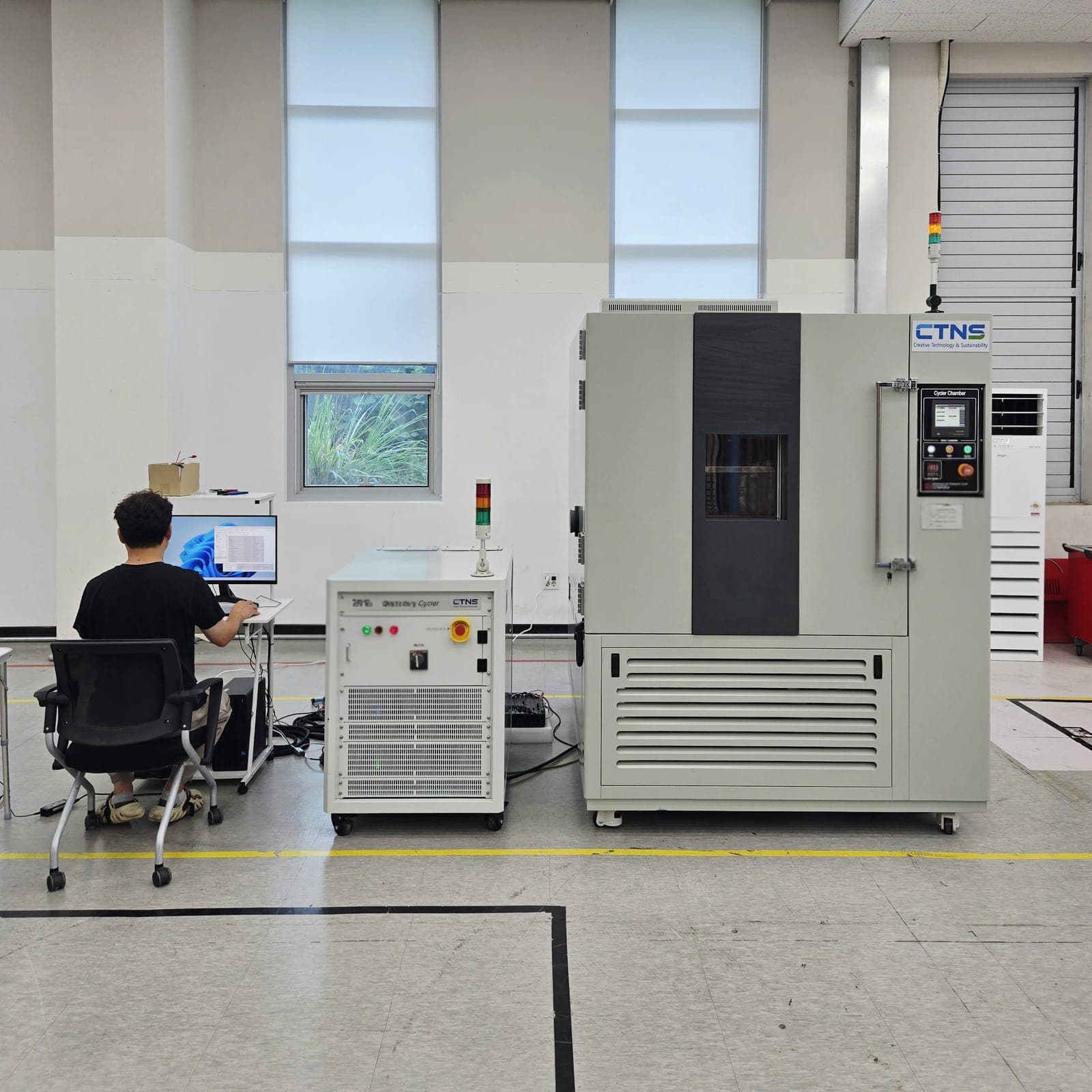
Long-term pack-level testing needs cyclers, temperature chambers, a data acquisition system and dedicated staff.
It's unclear how to make packs last longer
There is no easy way to check how much charging current, the state-of-charge (SOC) range you use and payload affect pack life.
Your quality team needs test evidence
When asked to document the conditions a pack was tested under, there is little to hand over.
We take your conditions, test, and return a comparison
It starts with your operating conditions and ends with a comparison report.
Your input
Specs and operating conditions
Operating scenario design
Test input profile
Pack comparison testing
Same-condition charge and discharge
Life estimation
Degradation models + test data
Comparison report
Operating condition review
STEP 1
Scenario design
We take your operating conditions (payload, slope, speed, charging pattern) and build a test scenario. An AI-assisted tool drafts the scenario, and our researchers review it before it goes into the test.
You can start without operating logs. We set up an assumed scenario from equipment specifications, an operating-conditions sheet and interviews with your team, and mark which parts are assumptions.
- What we receive
- Pack and equipment specifications, route profile, operating patterns
- What you get
- Representative operating scenario set (test scenarios summarizing typical operating conditions), test input profile (input data for the test equipment)
STEP 2
Pack comparison testing
We run pack-level charge and discharge tests with cyclers and temperature chambers. Because every pack is tested under the same conditions, degradation trends can be compared on the same basis. We run datasheet-condition tests alongside operating-scenario tests to show the difference between the two.
Capacity, internal resistance and other parameters are diagnosed at set intervals, and the test procedure is documented.
- What you get
- Test procedure, raw time-series data, diagnostic data for each check-up
STEP 3
Life estimation
We combine a physics-based degradation model with a data-driven model on the test data to estimate the life trend. Estimates stay within the range confirmed by testing, and that range is stated in the report.
- Data used
- Capacity, internal resistance and temperature diagnostic data from each check-up
STEP 4
Comparison report and operating guide
We summarize capacity retention trends, internal resistance growth and temperature-related differences by pack and by condition. Comparisons use the same criteria and assumptions. Where a difference falls within the uncertainty range, we do not rank the packs and record it as "Inconclusive."
Differences by charging current and SOC range are summarized within the range confirmed by testing.
- What you get
- Comparison report, review of operating conditions within the tested range
You can start with specifications and an operating-conditions sheet, even without operating logs
The method at a glance
How scenario design and life estimation are structured.
Specs and operating conditions
Payload, slope, speed, charging pattern
Vehicle dynamics calculation
Battery power during operation
Scenarios by operating condition
Types and intensity agreed with you
Researcher review
People check the scenario and inputs
Cycler current profile
Input for the test equipment
The intensity levels and input profile are examples for explanation. The actual setup is decided after we confirm your input data and test conditions.
Test data
Capacity · Internal resistance · Temperature
Physics-based degradation model
Explains trends from degradation mechanisms
Data-driven model
Calibrated with test data
Life estimate + uncertainty band
Within the range confirmed by testing
Decide on test results, not on unit price alone
The same questions get answered differently.
Which pack should we buy?
TodayUnit price and datasheets
With CTNSAlongside comparison results tested under your operating conditions
How long should the warranty be?
TodayLittle test data to refer to
With CTNSDecide with review material based on test data
How do we test?
TodayBuild equipment and run long-term tests in-house
With CTNSOutsource testing and analysis without equipment investment, and make interim decisions on early data
How do we make packs last longer?
TodayHard to know
With CTNSSee differences by SOC range and charging conditions within the tested range
What do we give the quality team?
TodayCell datasheet
With CTNSTest condition documents, raw time-series data, comparison report
See what you'll receive
Deliverables depend on the package and test scope you choose. Formats are PDF and data files such as CSV.
- Scenario
- Representative operating scenario set · Test input profile · Scenario analysis report
- Testing
- Test procedure · Raw time-series data · Diagnostic data for each check-up · Data quality information
- Analysis
- Pack comparison report · Review of operating conditions within the tested range
- To discuss
- Monitoring-system integration during operation
Scope and format are agreed in the contract. This service does not set or confirm warranty periods.
Examples of comparison material and life estimation
Drawn with hypothetical data to explain the format.
Hypothetical example for explanation · Not actual test or prediction results
Hypothetical example for explanation · Not actual test or prediction results
The 80% level and cycle counts are assumptions for explanation. The actual end-of-life criterion is set in the contract.
Hypothetical example for explanation · Not actual test or prediction results
An example assuming the same comparison point and otherwise identical conditions. It does not show which condition is better, any improvement effect, or a recommended SOC range.
Hypothetical example for explanation · Not actual test or prediction results
Hypothetical verdict example · Does not indicate that any real pack is better or worse.
New to this? Start with ①. Comparing packs? ②. Taking the long view? ③
Start with the scope you need. Pricing is quoted after consultation.
①Scenario diagnosis and test plan
For first-time inquiries or before a quote. We take your operating conditions, analyze the scenario and the segments that exceed ratings, and provide a test plan and the basis for the quote.
Degradation testing and life estimation are not included.
- Schedule
- Agreed after we receive your input data.
- Price
- Quote after consultation
②Pack comparison benchmark
For choosing a pack or setting operating conditions. Covers scenario design, comparison testing, degradation trend comparison and the report. What this shows is the early degradation trend within the test period; it does not promise a life ranking or a warranty period. Where a difference falls within the uncertainty range, we report it as "Inconclusive."
- Schedule
- Provided after test conditions are confirmed.
- Price
- Quote after consultation
③Long-term life assessment (based on in-house testing)
For pre-production validation or long-term partnerships. On top of ②, testing proceeds in stages toward an agreed target cycle count and stop criteria, with an interim report after each diagnostic check-up. If testing stops, we report the range actually confirmed and the reason it stopped. Scope and cost per stage are set in the contract.
This is an assessment based on CTNS in-house testing, not an accredited test report.
Test progress and the range confirmed are summarized in the interim reports.
- Schedule
- Provided once the target cycle count is set.
- Price
- Quote after consultation
We'll work out which package fits during the consultation
We design tests around your operating conditions
One team runs everything from testing to analysis, on the same criteria.
- Track record
- Currently carrying out a robot platform project for a large Korean corporation
- Test facilities
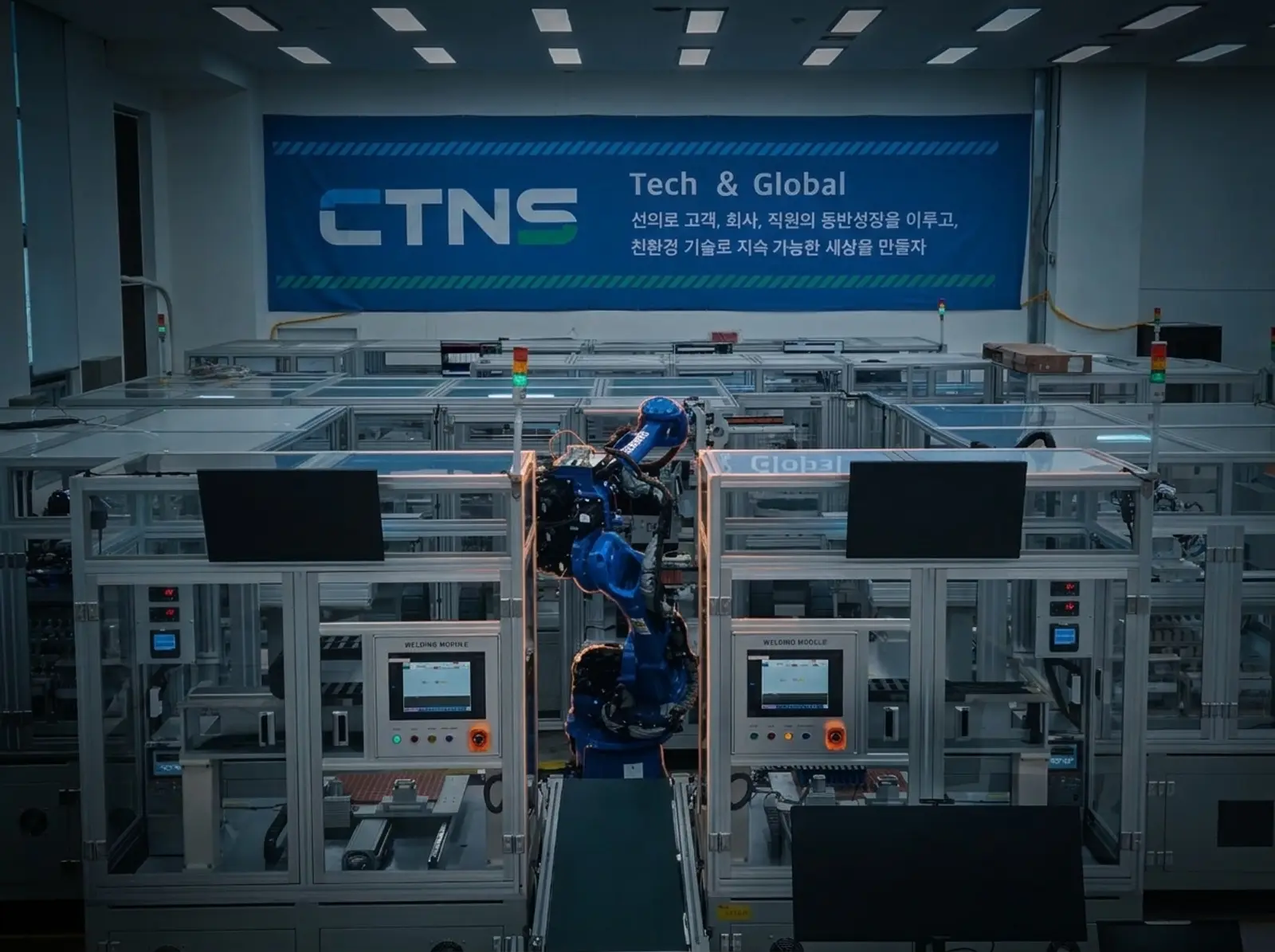
- We operate cyclers and temperature chambers for pack-level charge and discharge testing.
- Analysis
- We calculate battery power during operation from vehicle dynamics, and combine a physics-based degradation model with a data-driven model on the test data to estimate the life trend.
- Standards reference
- We review whether standard test items suited to your test purpose and target can be applied. The items referenced and the scope of procedure documents provided are set in the contract after consultation. This service is not testing or certification by a certification body.
- Monitoring-system integration
- Integration with monitoring systems during operation can be discussed.
Frequently asked questions
Can we start without operating logs?
Yes. Without logs, we start from an assumed scenario built from specifications, a segment-by-segment operating-conditions sheet and interviews with your team. Assumed parts are marked as assumptions in the report, and results can be split by assumption if needed. If the pack's allowable specifications are unknown, we hold off on designing and running physical tests and begin with consultation.
What should we prepare?
Pack and charger specifications, a route profile (speed, time, slope, stops), curb weight and payload, daily operation and charging patterns, efficiency, regeneration and auxiliary load data, and the packs you want to compare and their condition. You don't need all of it. Tell us what you have, and we'll work out the gaps together.
Can you test large packs?
We'll let you know whether and how we can test once we've confirmed the target packs and operating conditions.
How accurate is the life prediction?
Results are given within the range confirmed by testing, and that range and the uncertainty band are stated in the report. We do not promise accuracy figures or warranty periods.
What if the packs come out about the same?
If the difference falls within the uncertainty range, we don't rank them and report the result as "Inconclusive." Forcing a ranking from a short test period can lead to the wrong choice.
Can we get certification testing or an accredited test report?
No. This service is not testing or certification by a certification body, and it does not issue accredited test reports. We review whether standard test items suited to your test purpose and target can be applied. The items referenced and the scope of procedure documents provided are set in the contract after consultation.
What does it cost and how long does it take?
It depends on the number of packs, the number of operating conditions and the test scope. We provide a quote after consultation and a schedule once test conditions are confirmed.
What happens to the tested packs and the data?
Samples may degrade or be damaged during testing. How samples are received, returned or disposed of, who bears responsibility and cost for damage during testing, and the scope of data provision and use are set in the contract before testing begins.
Let's first check whether it works for your conditions
Share only what you know. We'll work out the rest in the consultation.
We'll let you know whether and how we can test once we've confirmed the target packs and operating conditions
Phone010-6610-2571
We provide a quote after consultation.
This is a comparison and analysis service based on CTNS in-house testing. It is not testing or certification by a certification body.
Intake checklist (6 items)
- 01
Equipment, pack and charger specifications
Capacity, operating voltage, allowable charge/discharge range, temperature range, BMS limits, charging conditions
- 02
Route profile
Speed or distance/time per segment, acceleration/deceleration and stops, slope, segment duration and repetitions
- 03
Mass and environment
Curb weight, average/maximum payload, road surface, ambient temperature and cooling conditions
- 04
Daily operation and charging schedule
Operating, idle and storage time, SOC range used, number of charges and whether opportunity charging is used
- 05
Efficiency, regeneration and auxiliary load
Efficiency data or an agreed assumption range, whether regeneration is used and its rules, standby and auxiliary loads
- 06
Comparison purpose and sample condition
What is being compared, new or used and usage history, decision purpose (e.g. end-of-life criterion), data contact person
For items with missing data, we agree on assumption ranges together in the consultation. However, if the pack's allowable specifications (charge/discharge range, temperature range, BMS limits) are unknown, we can still hold the consultation, but physical test design and testing begin only after those specifications are confirmed.